 He doesn’t look like your usual 66 year old American male.
For one thing, he is thin; some would say skinny. In fact, when he was young,
he was called “scrawny”. His fair skin shows the wrinkles and freckles acquired
in a lifetime spent outdoors. His features are pleasant, friendly, and framed
around a generous nose and a quick smile. He has a shock of unruly hair, still
sandy brown, that hasn’t changed much since he won his first Boston Marathon in
1975 as an unknown, wearing a ratty T-shirt on which he had penciled in “Boston
GBTC (Greater Boston Track Club)”, setting an American record for the marathon
in the process.
He doesn’t look like your usual 66 year old American male.
For one thing, he is thin; some would say skinny. In fact, when he was young,
he was called “scrawny”. His fair skin shows the wrinkles and freckles acquired
in a lifetime spent outdoors. His features are pleasant, friendly, and framed
around a generous nose and a quick smile. He has a shock of unruly hair, still
sandy brown, that hasn’t changed much since he won his first Boston Marathon in
1975 as an unknown, wearing a ratty T-shirt on which he had penciled in “Boston
GBTC (Greater Boston Track Club)”, setting an American record for the marathon
in the process.
 Bill Rodgers is 66 and looks like he is capable of going out
and winning another Boston. Today, though, he is sitting in a chair, behind a
folding table in a room at the Mount Dora, FL community center. His book, Marathon
Man, has just been published. Tomorrow is the 2013 Mount Dora half marathon
and 5K on Sunday, December 15. He is in town to run the latter and sign copies of his book. When I
heard that he would be there, I could not pass up the chance to see and meet an
icon of the sport and one of my athletic heroes going back to when I first
heard of the crazy thing called a marathon.
Bill Rodgers is 66 and looks like he is capable of going out
and winning another Boston. Today, though, he is sitting in a chair, behind a
folding table in a room at the Mount Dora, FL community center. His book, Marathon
Man, has just been published. Tomorrow is the 2013 Mount Dora half marathon
and 5K on Sunday, December 15. He is in town to run the latter and sign copies of his book. When I
heard that he would be there, I could not pass up the chance to see and meet an
icon of the sport and one of my athletic heroes going back to when I first
heard of the crazy thing called a marathon.
 I expected many others to do the same and arrived at the
community center prepared to confront crowds, a long line, and an equally long
wait. After all, this was Bill Rodgers. THE Bill Rodgers. Boston Billy. Winner
of 4 Boston and 4 New York marathons in the five year span from 1975 to 1980. Inducted
into the National Distance Running Hall of Fame in Utica, NY. I hoped to spend a brief moment with him, shake
his hand, and get his signature on the flyleaf of his book. Instead, I found myself in a line, if you want
to call it that, of about 10 people, two in front of me and the rest behind.
Bill took a lot of time with the first two people. I could see that he wrote a
lot on the inside of the books. He spoke
at length with them. Then, I was standing in front of the little guy in the
green shirt and jeans with the wild hair, shorter than me, but a giant in the
field of running. Oddly, I didn't feel at all nervous. He wasn't a 6' 4" NFL linebacker or a 7' NBA star, just a little guy who looked like, well, any runner out there on any given day. We shook hands and I said, "Surely you remember me". He looked hard, as though he surely should. "You blew by me at the end of the Cape Cod Marathon in 1995." He smiled as though he did, indeed, remember.
I expected many others to do the same and arrived at the
community center prepared to confront crowds, a long line, and an equally long
wait. After all, this was Bill Rodgers. THE Bill Rodgers. Boston Billy. Winner
of 4 Boston and 4 New York marathons in the five year span from 1975 to 1980. Inducted
into the National Distance Running Hall of Fame in Utica, NY. I hoped to spend a brief moment with him, shake
his hand, and get his signature on the flyleaf of his book. Instead, I found myself in a line, if you want
to call it that, of about 10 people, two in front of me and the rest behind.
Bill took a lot of time with the first two people. I could see that he wrote a
lot on the inside of the books. He spoke
at length with them. Then, I was standing in front of the little guy in the
green shirt and jeans with the wild hair, shorter than me, but a giant in the
field of running. Oddly, I didn't feel at all nervous. He wasn't a 6' 4" NFL linebacker or a 7' NBA star, just a little guy who looked like, well, any runner out there on any given day. We shook hands and I said, "Surely you remember me". He looked hard, as though he surely should. "You blew by me at the end of the Cape Cod Marathon in 1995." He smiled as though he did, indeed, remember.
I remembered it well. I had never seen an elite runner up close. I was hobbling along with a torn, bleeding toenail, ripped off on one of the many hills on this "flat" course, dejected, in pain, and knowing I had failed in my bid to qualify for the 100th running of the Boston Marathon the following year. Suddenly here came Bill, anchoring the Ocean Spray Relay Team. He was long past his prime but still loping along with this effortless, huge stride that made him look nothing less than a human gazelle, flying over the ground, barely touching earth. Even sprinting I could not have kept up. It was a thrill I have never forgotten.
 For the next five or more minutes, we chatted about running,
my recent Ironman triathlon, keeping fit over a lifetime, cross training,
staying balanced, the importance of family, and more. It was like chatting with
an old friend. I became self-conscious about the time he was taking with me but
at no time did he act as though he needed to cut things short to get on to the
next in line. In fact, I had to beg off with a comment about not wanting to monopolize
his time. He signed my book. “Rick”, it said, “Congratulations on your Ironman
triathlon! I’ll never do one of those (this from someone who used to put in 170
mile training weeks routinely) but it’s part of your “running story”. Let’s run
forever! Bill Rodgers”. He gave me a card with his personal email address.
For the next five or more minutes, we chatted about running,
my recent Ironman triathlon, keeping fit over a lifetime, cross training,
staying balanced, the importance of family, and more. It was like chatting with
an old friend. I became self-conscious about the time he was taking with me but
at no time did he act as though he needed to cut things short to get on to the
next in line. In fact, I had to beg off with a comment about not wanting to monopolize
his time. He signed my book. “Rick”, it said, “Congratulations on your Ironman
triathlon! I’ll never do one of those (this from someone who used to put in 170
mile training weeks routinely) but it’s part of your “running story”. Let’s run
forever! Bill Rodgers”. He gave me a card with his personal email address.
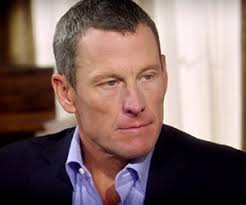 In a world where our sports heroes seem better known for
their doping, cheating, lying, and oversized egos it is incredibly refreshing
to meet one who seems the polar opposite. I think he was perfectly happy to
just hang out and chat. I felt like Bill would have been thrilled to accept an
invitation to go for a run if I had extended one. He made me feel like he was as
delighted, if not more so, to meet me as I was to meet him. It made me proud to
be a runner.
In a world where our sports heroes seem better known for
their doping, cheating, lying, and oversized egos it is incredibly refreshing
to meet one who seems the polar opposite. I think he was perfectly happy to
just hang out and chat. I felt like Bill would have been thrilled to accept an
invitation to go for a run if I had extended one. He made me feel like he was as
delighted, if not more so, to meet me as I was to meet him. It made me proud to
be a runner.
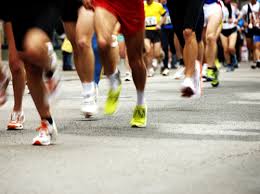
So, with an icon this personable and approachable, why wasn’t
his table mobbed with an adoring crowd? I think it comes down to the nature of
running itself. While running is an extremely popular sport, it does not lend
itself to the kind of media coverage that other sports do. With the exception
of the quadrennial Olympics and the Boston Marathon, main stream media coverage
of running is almost non-existent. Other than the occasional Rosie Ruiz
hitching a ride to the end of a marathon, scandals in running are few and far
between. Running, while certainly sociable, is not a team sport where rooting
for your college or pro team is practiced. Professional runners don’t make the
big bucks, like other athletes; they are much more likely to be your neighbor
than the NFL quarterback or NBA center, making hero worship problematic. Running is everyman’s sport, requiring
no organization, special equipment, or venue. You can’t play football with your
pro team on Sunday, drive the lane with your NBA team at the local arena, or
drive a ball at Augusta during the Master’s, but you can run Boston with the
likes of Bill Rodgers as thousands have. To us runners, Bill is just another
runner, who happens to get to the finish line a little faster.


No comments:
Post a Comment